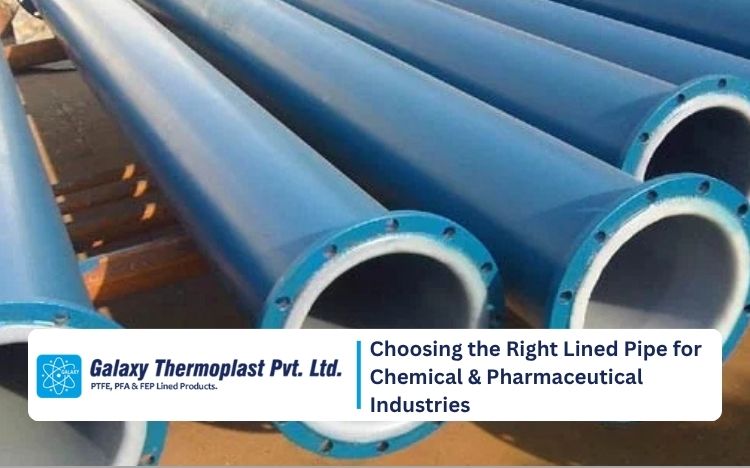
Corrosive acids, harsh solvents and sensitive pharmaceutical fluids need the right piping choice. A single mismatch between the chemical and the pipe wall can mean pitting or a failed batch. That is why a lined pipe combines a metal outer pipe with a corrosion-resistant internal lining, pairing structural strength with chemical protection. Getting the selection right depends on compatibility, temperature, pressure and cleanliness.
What Is a Lined Pipe?
A lined pipe pairs an outer metal pipe, built in carbon steel or stainless steel, with an inner layer of chemical-resistant material running along the bore. The metal shell handles the mechanical load: pressure, weight and installation stress. The lining sits between the fluid and the wall, blocking direct contact and the corrosion it causes. Common linings include PTFE, FEP, PFA, rubber and other thermoplastics. PTFE, FEP and PFA lined pipes, fittings and valves show how these materials fit specific chemical duties.
Why Lined Pipes Are Used in Chemical and Pharmaceutical Industries
Chemical fluids attack conventional metal piping within months, not years. Pharmaceutical processes demand contact surfaces that stay clean and chemically inert through every batch. A well-matched lining reduces direct contact between fluid and pipe wall, cutting corrosion, contamination risk and unplanned downtime. Service life extends and maintenance intervals stretch further apart. Chemical resistance alone is not enough; the lining also has to suit the temperature, pressure and cleaning regime of the process.
Key Factors for Choosing the Right Lined Pipe
Eight factors decide whether a lined pipe for chemical industry application performs for years or fails within months.
Chemical compatibility: Identify the exact chemicals, concentrations, solvents, acids and alkalis in the stream.
Operating temperature: Check continuous and peak process temperatures, since performance shifts near rated limits.
Pressure requirements: Match the pipe to the operating and design pressure, not just the fluid.
Lining material: Compare PTFE, rubber and thermoplastic linings on resistance, temperature and strength.
Abrasion resistance: Fluids carrying suspended solids wear a lining faster than clean chemicals.
Cleanliness requirements: Pharmaceutical lines need smooth, non-contaminating bores suited to repeated cleaning.
Pipe dimensions: Confirm diameter, wall thickness and end connections match the existing system.
Standards and certifications: Verify the specifications a project demands, whether ASME, ASTM or pharmaceutical grade.
Selecting Lining Materials for Chemical Applications
PTFE linings handle a wide variety of corrosive chemicals from strong acids to aggressive solvents over a wide temperature band. Rubber lining is suitable for certain corrosive and abrasive services where mechanical wear is as important as chemistry. FEP and PFA thermoplastic linings are suitable for conditions where PTFE alone is not sufficient. No single lining works for every application, so selection weighs concentration, temperature, pressure, abrasion and service life.
Special Considerations for Pharmaceutical Piping
Pharmaceutical piping carries hygiene requirements beyond standard chemical service. Internal surfaces need to stay smooth wherever product contact occurs, resisting contamination and chemical interaction. The lining must tolerate repeated cleaning and sanitisation cycles without degrading. Temperature and pressure during processing and cleaning both need attention, since a lining validated for one can fail under the other. Material selection and documentation should follow the specific process, not a generic standard.
Common Applications of Lined Pipes
The following applications account for most of the current demand for corrosion-resistant, chemically compatible piping.
Acid and alkali transfer: Concentrated acids and caustic solutions move through lines isolated from direct attack.
Chemical processing systems: Reactors and transfer lines handle aggressive intermediates without contaminating batches.
Solvent handling: Solvents that would degrade unlined metal move safely through PTFE or PFA sections.
Pharmaceutical process lines: Formulation lines maintain clean, non-reactive surfaces through every production run.
Water and wastewater treatment: Chlorinated and acidic streams resist corrosion; untreated metal cannot withstand.
Fertiliser manufacturing: Phosphoric and sulphuric acid streams demand high-concentration exposure resistance.
Speciality chemical production: Custom formulations with narrow compatibility windows need a specific lining.
Corrosive fluid transfer: General transfer duties, from tank farms to process units, gain longer life.
Dosing and process systems: Precise dosing lines for acids and additives keep flow rates consistent.
Common Mistakes to Avoid When Selecting Lined Pipes
Selecting lined pipe on the wrong basis leads to premature failure and costly replacement. These mistakes recur across chemical and pharmaceutical projects.
- Choosing a lining based only on price
- Ignoring the actual chemical concentration
- Overlooking the peak, not the average temperature
- Failing to account for pressure and vacuum
- Selecting an unsuitable lining for abrasive fluids
- Ignoring pharmaceutical cleanliness requirements
- Skipping supplier documentation and quality checks
Conclusion
Choosing the right lined pipe for chemical industry and pharmaceutical applications comes down to matching fluid, lining material, temperature, pressure, abrasion and cleanliness to the actual process, not a general assumption. Chemical and pharmaceutical requirements rarely overlap exactly. A lining selected against real operating conditions delivers reliable corrosion protection, longer service life and safer, more efficient fluid handling.


