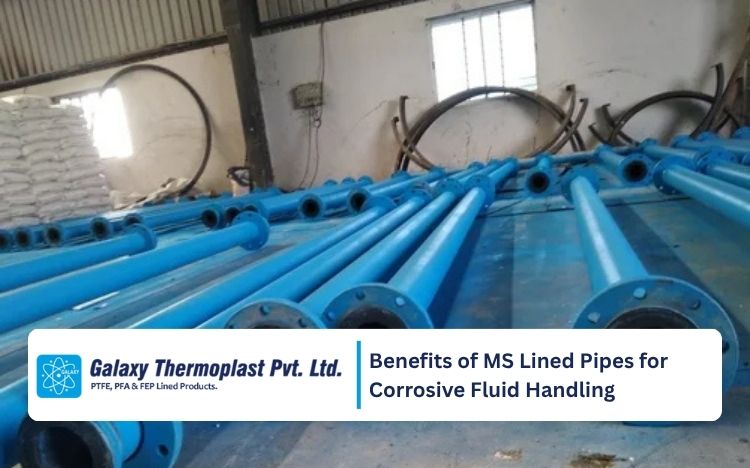
Corrosive fluids deteriorate raw metal quickly and determine most piping decisions in chemical processing. MS-lined pipes address these issues by integrating a mild steel outer body with a corrosion-resistant internal lining. The steel carries the mechanical load, while the lining is between the fluid and the metal wall. Inaccessible, corrosive media thin pipe walls, causing leaks and fouling the process stream. A matched lining extends service life and keeps transfer systems running with fewer shutdowns.
What Are MS Lined Pipes?
Mild steel lined pipes pair an MS outer shell with an internal lining resistant to the fluid being transmitted. The steel body handles pressure, bending loads and installation stresses across long pipe runs. Inside, the lining physically prevents the transported fluid from coming into direct contact with the steel surface, effectively preventing chemical contact. Lining choice depends on the fluid concentration, operating temperature, working pressure and the specific application.
Why Corrosive Fluids Require Protected Piping
Acids, alkalis, chlorides and other aggressive fluids corrode bare metal surfaces in contact, and the damage compounds over time. This leads to wall thinning, pinhole leaks, product contamination and pipe sections that need replacing well ahead of schedule if overlooked. Matching pipe materials to fluid chemistry from the design stage avoids these breakdowns. Choosing a lining rated for the specific fluid ensures the steel substrate remains out of contact with corrosive media, supporting long-term reliability and safer plant operation.
Key Benefits of MS Lined Pipes for Corrosive Fluid Handling
GALAXY-lined MS pipes combine structural strength with chemical resistance in one pipeline system:
- Improved corrosion protection
The internal lining isolates the mild steel from corrosive fluids and cuts down direct chemical attack on the pipe wall.
- Longer service life
Protecting the internal surface reduces corrosion-driven wear and stretches the pipe’s usable working life.
- Strong structural support
The MS outer pipe supplies the mechanical strength and rigidity needed for demanding industrial installations.
- Cost-effective construction
Pairing an economical MS structure with a corrosion-resistant lining offers a practical alternative to building the entire pipe from an expensive alloy.
- Reduced maintenance
Better internal protection lowers the frequency of repairs, replacements and unplanned shutdowns.
- Fluid compatibility
Lining materials can be matched to the chemical properties of the specific fluid in service.
- Reduced contamination
A suitable lining keeps the underlying steel from reacting with the conveyed medium.
- Reliable fluid handling
Correctly selected and installed lined pipes support consistent performance across chemical and industrial processing systems.
Common Lining Materials Used in MS Lined Pipes
Lining choice depends heavily on the fluid, temperature, pressure and abrasion conditions of each application, and different lining materials suit different services:
- Rubber lining
Suited to certain chemical services and abrasive slurry transport.
- PTFE lining
Covers a wide range of aggressive chemical services with broad chemical resistance.
- FRP or thermoplastic linings
Protect against corrosion in selected chemical-handling applications.
The right lining depends on chemical concentration, operating temperature, pressure, abrasion exposure and compatibility requirements.
Applications of MS Lined Pipes
MS lined pipes serve corrosive and chemically aggressive fluid-handling systems across a wide range of process industries, with common installations including:
- Chemical processing plants
- Acid and alkali handling systems
- Water and wastewater treatment
- Pharmaceutical processing
- Fertiliser plants
- Petrochemical facilities
- Mining and mineral processing
- Industrial chemical transfer systems
- Slurry and corrosive-fluid handling
Each of these conditions shares the same underlying requirement: keeping aggressive or contaminating fluids out of direct contact with structural steel.
Factors to Consider When Selecting MS Lined Pipes
Selecting the right MS lined pipe for a corrosive application requires weighing several technical factors before finalising a specification with the supplier:
- Type and concentration of the fluid
- Operating temperature
- Working pressure
- Chemical compatibility of the lining
- Abrasion and erosion conditions
- Pipe diameter and wall thickness
- Required lining thickness
- Joint and connection design
- Applicable standards
- Supplier quality and lining inspection
Conclusion
MS lined pipes bring together the structural strength of mild steel and the chemical protection of an internal lining. That combination improves corrosion resistance, extends service life, and cuts maintenance frequency versus bare steel piping. Lining selection still has to match the actual fluid, temperature and pressure conditions of each application. Chosen and installed correctly, MS lined pipes deliver dependable performance in demanding corrosive-fluid handling systems.
